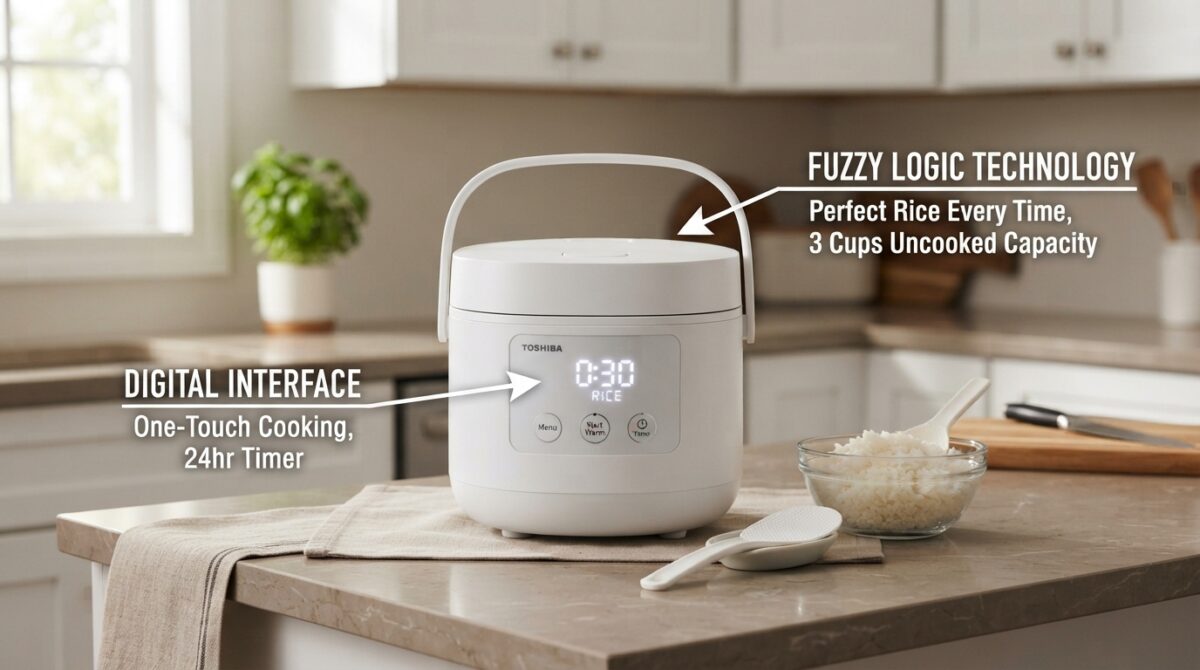
Toshiba Mini Rice Cooker (3-Cup): A Practical Overview

Introduction

Not every household needs a large rice cooker built around family-sized batches. The Toshiba Mini Rice Cooker takes the opposite approach, offering a 3-cup uncooked capacity aimed at smaller households, individuals, or anyone who simply doesn’t need a bigger unit taking up counter space. Despite its smaller size, it still includes fuzzy logic technology, one-touch cooking, a 24-hour delay timer, and automatic keep-warm functionality — features more often associated with larger, more advanced rice cookers. This article looks at what the Toshiba Mini actually offers, how it tends to be used, who it fits best, and a few practical points worth thinking through before it earns a spot in your kitchen.

As with the other appliance breakdowns in this series, the goal here isn’t to declare this the definitive best small rice cooker on the market, but to walk through its features clearly enough that you can weigh them against your own portion needs and daily routine.

Key Features

3-cup uncooked capacity. This puts the unit solidly in the compact category, generally translating to a cooked yield suited to one to three people, depending on portion size and whether rice is a main component of the meal or a side dish.

Fuzzy logic technology. Rather than relying on a single, fixed cooking cycle, fuzzy logic systems generally adjust cooking time and heat based on the specific rice type and moisture conditions, aiming for more consistent texture compared to a basic, one-size-fits-all cooking program.

One-touch cooking. The unit is designed for simple operation, generally requiring just a single button press to start the cooking cycle, which keeps the day-to-day experience straightforward rather than requiring multiple setting selections.

24-hour delay timer. This feature allows cooking to be scheduled up to a full day in advance, letting rice start cooking, and finish, at a specific time chosen ahead of time rather than needing to start the process manually right when it’s needed.

Auto keep-warm function. Once cooking finishes, the unit automatically switches to a keep-warm setting, holding rice at a safe, ready-to-eat temperature until it’s time to serve, without requiring a separate reheating step.

Steaming function. Beyond just cooking rice, the unit includes a steaming capability, generally used with an included tray or insert for vegetables or other foods prepared alongside the rice.

Compact, mini form factor. The overall physical size is smaller than a standard rice cooker, which is the core appeal for anyone with limited counter or storage space, or simply cooking smaller quantities on a regular basis.

White finish. The exterior comes in a white finish, which is a fairly common and versatile color choice for smaller kitchen appliances meant to blend into a variety of kitchen aesthetics.

How It Can Be Used

The core use, as with any rice cooker, is preparing rice without needing to monitor a pot on the stove, but the smaller 3-cup capacity makes this particularly well suited to individual meals or cooking for just a couple of people rather than a larger family batch.

The fuzzy logic system comes into play across different rice types, generally adjusting the cooking process depending on whether white rice, brown rice, or another grain is being prepared, aiming for consistent results without requiring the user to manually fine-tune settings for each type.

One-touch operation is generally used for the simplest, most frequent version of the task — add rice and water, press the button, and let the unit handle the rest, which suits those who want a quick, low-effort process for a task they repeat often.

The 24-hour delay timer is commonly used by people who want rice ready at a specific time without being present to start the cooking cycle themselves — for example, setting it before leaving for work so rice is finished and ready by the time dinner needs to be prepared.

The auto keep-warm function is generally used any time there’s a gap between when rice finishes cooking and when it’s actually eaten, which is a common enough occurrence that this feature tends to get used almost automatically as part of routine operation.

The steaming function is generally used to prepare a vegetable side or protein alongside the rice, letting a simple meal come together using just the one appliance rather than requiring a separate steaming pot.

Who It May Be Suitable For

Individuals or couples. The 3-cup capacity is generally well matched to smaller households, where a full-size rice cooker’s larger capacity would go mostly unused on a regular basis.

People with limited kitchen space. The compact, mini design is a natural fit for smaller kitchens, dorm rooms, or secondary living spaces where a bigger appliance simply wouldn’t fit comfortably.

Those who want advanced features without a larger unit. Because it still includes fuzzy logic, a delay timer, and keep-warm functionality, this model may appeal to those who want more than a bare-bones mini cooker, without needing the larger capacity that typically comes bundled with those features.

People with predictable schedules who like advance planning. The 24-hour delay timer suits those who prefer to set things up in advance, such as scheduling rice to finish right around a typical dinner time without needing to be home to start the process.

Anyone wanting a simple, low-maintenance rice cooking experience. The one-touch operation keeps day-to-day use straightforward, which may appeal to those who don’t want to deal with a complicated set of manual settings for a task that ideally should be quick and easy.

Larger households or those who regularly cook for more than a few people would likely find the 3-cup capacity too limiting for consistent use, and a standard or larger-capacity rice cooker would generally be a more practical choice in that case.

Important Things to Consider

Capacity limits for anything beyond small portions. It’s worth being realistic about typical rice consumption before choosing this size, since 3 cups uncooked is meaningfully smaller than standard household rice cookers and isn’t intended for larger family meals.

Steaming tray size relative to the unit. As is generally true with compact rice cookers, the included steaming accessory is sized to match the smaller unit, so it’s better suited to modest portions of vegetables or a small protein piece rather than larger quantities.

Delay timer and food safety considerations. When using a delay timer, it’s worth being mindful of how long rice and water sit together before cooking begins, since food safety guidance generally recommends not leaving raw rice in water for extended periods at room temperature before the cooking cycle starts.

Keep-warm duration and rice quality. As with most rice cookers, extended time on keep-warm can gradually affect texture, even though the auto keep-warm function is generally intended for safe, short-to-medium term holding rather than indefinite storage.

Non-stick interior care. Regular, gentle cleaning with non-abrasive tools is generally recommended to preserve the interior cooking surface and maintain consistent performance over the appliance’s lifespan.

Simplicity trade-offs. While one-touch operation and a compact design offer convenience, those wanting more manual control over cooking settings for very specific recipes may find a slightly more feature-rich, larger unit better suited to that kind of experimentation.

Comparison of General Categories

Compact, mini rice cookers with advanced features, the category this model belongs to, aim to combine smaller capacity with more sophisticated cooking technology like fuzzy logic and delay timers, generally suited to individuals or small households wanting more than a bare-bones mini cooker.

Basic mini rice cookers typically skip more advanced features like fuzzy logic or delay timers, focusing purely on a simple, smaller-capacity cooking cycle, often at a lower price point.

Standard-capacity rice cookers (4–8 cups) are better suited to small to medium households needing to cook for multiple people or wanting leftovers, generally at a larger physical size than a mini unit.

Personal, single-serving rice cookers go even smaller than this model, focusing specifically on individual portions rather than the slightly larger 3-cup range offered here.

Stovetop rice cooking remains a no-appliance alternative for any portion size, offering full manual control but requiring more attention to avoid under- or overcooking, which can be especially easy to do with smaller quantities.

The right category generally comes down to typical household size, how much value is placed on advanced features like delay timers and fuzzy logic technology, and how much kitchen space is realistically available for a dedicated rice cooking appliance.

Frequently Asked Questions

How much rice can the Toshiba Mini Rice Cooker prepare at once? It’s designed for up to 3 cups of uncooked rice, generally suited to individual servings or small households of one to three people.

What does fuzzy logic technology do in a compact rice cooker like this one? It generally adjusts cooking time and temperature based on the specific type of rice being prepared, aiming for more consistent results compared to a fixed, one-size-fits-all cooking cycle.

How does the 24-hour delay timer work? It allows cooking to be scheduled up to 24 hours in advance, so rice can finish cooking at a specific time chosen ahead of time rather than needing to start the process manually right when it’s needed.

Does it include a steaming function? Yes, the unit includes steaming capability, generally used with an included tray for vegetables or other foods alongside rice cooking.

What happens after the rice finishes cooking? The unit automatically switches to a keep-warm setting, maintaining a safe, ready-to-eat temperature until the rice is served.

Is this suitable for larger households? Given its 3-cup capacity, it’s generally better suited to smaller households or individual servings, and a larger-capacity rice cooker would be more practical for bigger families or regular batch cooking.

Is one-touch cooking difficult to learn? No, one-touch operation is designed to be simple, generally requiring just a single button press to start the cooking cycle without needing to navigate multiple manual settings.

Conclusion

The Toshiba Mini Rice Cooker combines a compact, 3-cup capacity with features more commonly found on larger rice cookers, including fuzzy logic technology, a 24-hour delay timer, one-touch cooking, and automatic keep-warm functionality. It’s built specifically for smaller households or individual use, without sacrificing the more advanced cooking technology that helps produce consistent results.

Whether this specific model fits a given kitchen depends on typical portion needs, available counter space, and how much value is placed on scheduling flexibility and consistent cooking performance in a smaller-capacity unit. For individuals or small households looking for a compact rice cooker that doesn’t skimp on useful features, the Toshiba Mini offers a fairly well-rounded set of capabilities scaled specifically to smaller everyday needs.
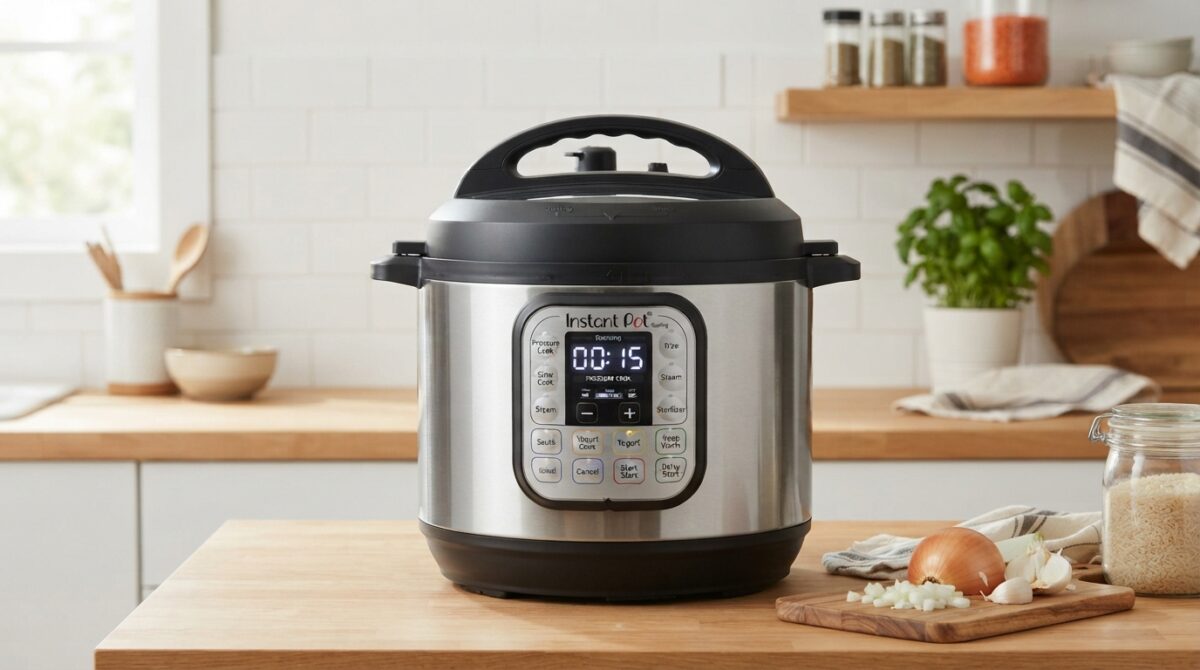
Instant Pot Duo Plus 9-in-1 Multicooker: A Practical Overview

Introduction

Multicookers have carved out a real place in a lot of kitchens over the past several years, largely by replacing several separate appliances with one device that can pressure cook, slow cook, steam, and more. The Instant Pot Duo Plus is one of the more established names in that category, offering nine functions in a single 6-quart stainless steel unit, along with app-based recipe access. This article walks through what the Duo Plus actually does, how its various functions tend to get used, who it fits best, and what’s worth thinking through before it becomes a permanent fixture on your counter.

As with the other appliance breakdowns in this series, the goal isn’t to declare this the single best multicooker on the market — it’s to walk through the specifics clearly enough that you can weigh them against your own cooking habits and kitchen needs.

Key Features

9-in-1 functionality. The unit combines pressure cooking, slow cooking, rice making, steaming, sautéing, yogurt making, warming, and sterilizing into one appliance, covering a considerably broader range of cooking methods than a single-purpose device.

6-quart capacity. This size is generally suited to small to medium households, offering enough capacity for family-sized meals or batch cooking without being oversized for a typical kitchen counter.

Pressure cooking function. This is often considered the core feature of the Instant Pot line, using sealed, pressurized steam to cook food significantly faster than conventional boiling or simmering, which is particularly useful for foods that would otherwise take a long time, like dried beans or tougher cuts of meat.

Slow cook function. In addition to fast pressure cooking, the unit can operate in the opposite mode, allowing for long, low-temperature cooking similar to a traditional slow cooker, suited to dishes like stews or braises that benefit from extended cook times.

Rice maker function. A dedicated rice setting allows the unit to function similarly to a standalone rice cooker, adjusting time and pressure for consistent rice results without needing a separate appliance.

Steamer function. The unit can be used for steaming vegetables, seafood, or other foods, generally using an included or separately purchased steaming rack or basket insert.

Sauté function. This allows browning or sautéing directly in the pot before switching to pressure cooking or slow cooking, which is useful for recipes that call for browning meat or aromatics as an initial step.

Yogurt-making function. A dedicated yogurt setting maintains the specific low, consistent temperature needed for yogurt culturing, extending the appliance’s use into homemade dairy preparation.

Warmer and sterilizer functions. Beyond active cooking, the unit includes a warming setting for holding finished food at a safe temperature, along with a sterilizing function, generally used for sanitizing items like baby bottles or canning jars.

Companion app with 800+ recipes. The Duo Plus connects to a companion app offering access to a large recipe library, intended to help users get more out of the appliance’s various functions without needing to source recipes separately.

Stainless steel construction. The inner pot and exterior components use stainless steel, which is generally valued for durability and being free of the coatings found in some nonstick alternatives.

How It Can Be Used

The pressure cooking function is generally the most frequently used mode for many owners, relied on for meals that would otherwise take much longer through conventional cooking — dried beans without pre-soaking, tender pot roasts, or stews that would normally simmer for hours on a stovetop.

The slow cook function serves a different purpose, generally used for dishes where a longer, gentler cooking process is preferred, such as pulled pork, soups, or dishes meant to be started in the morning and finished by dinner.

The rice function is commonly used as a direct substitute for a standalone rice cooker, particularly convenient for households that would rather not own a separate rice-specific appliance in addition to the multicooker.

The sauté function is often used at the beginning of a recipe, allowing meat or vegetables to be browned directly in the pot before switching to pressure or slow cook mode, which streamlines many one-pot recipes by removing the need for a separate pan.

The steaming function is generally used with an insert to steam vegetables, dumplings, or seafood, either as a standalone task or as part of a larger meal being prepared in stages within the same pot.

The yogurt function is typically used by those interested in making homemade yogurt, maintaining the specific temperature range needed for culturing over an extended period, which is a less common feature among general-purpose multicookers.

The warmer function is generally used to hold finished food at serving temperature until mealtime, while the sterilizer function is often used by those with young children needing to sanitize bottles, or by anyone doing home canning who needs to sterilize jars before use.

The companion app is generally used to browse recipes tailored to the appliance’s specific functions, which can be particularly helpful for those newer to pressure cooking who want guided instructions rather than adapting traditional recipes on their own.

Who It May Be Suitable For

Households wanting to consolidate multiple kitchen appliances. Given the nine included functions, this unit may particularly appeal to those hoping to reduce the number of separate appliances — a rice cooker, slow cooker, steamer, and yogurt maker — taking up space in their kitchen.

People who value faster cooking times. The pressure cooking function is especially relevant for those wanting to cut down on the time needed for dishes that traditionally require long, slow cooking, like beans, tough cuts of meat, or bone broth.

Home cooks interested in trying new techniques. With features like yogurt making and sterilizing included, this unit may suit those interested in expanding beyond typical stovetop cooking into other kitchen projects.

Those who prefer guided, recipe-based cooking. The companion app’s large recipe library may particularly appeal to newer multicooker users who want structured guidance for the appliance’s different functions rather than experimenting from scratch.

Small to medium households. The 6-quart capacity generally suits two to four people comfortably, with some flexibility for batch cooking or leftovers.

Larger households needing to cook very large batches regularly, or those specifically wanting a dedicated, single-purpose appliance for one task, such as only slow cooking, may find a bigger-capacity multicooker or a simpler single-function appliance better suited to their particular needs.

Important Things to Consider

Learning curve across nine functions. With this many distinct modes, understanding pressure cooking safety, timing, and the differences between functions generally takes some initial learning, particularly for anyone new to pressure cooking specifically.

Pressure cooking safety practices. As with any pressure cooker, understanding proper sealing, venting, and pressure release procedures is an important part of using the appliance safely, and following the included instructions closely is generally recommended, especially for new users.

Counter and storage space. A 6-quart multicooker is a reasonably sized appliance, and between the main unit and any additional accessories like steaming racks, some dedicated storage space is generally needed.

App dependency for full recipe access. While the unit can be used entirely without the app, accessing the full recipe library generally requires a smartphone and app setup, which may not appeal to everyone equally.

Not identical to a dedicated appliance for every function. While versatile, each individual function — rice making, slow cooking, yogurt making — generally won’t fully match the specialized performance or capacity of a dedicated single-purpose appliance built solely around that one task.

Sealing ring maintenance and odor retention. The rubber sealing ring used for pressure cooking can sometimes retain odors from strongly flavored dishes over time, which is a common consideration among multicooker owners and generally addressed through regular cleaning or having a second sealing ring for different types of cooking.

Comparison of General Categories

Multi-function electric pressure cookers, the category this model belongs to, generally aim to consolidate several individual kitchen appliances into one unit, trading some specialized performance for broader versatility and reduced kitchen clutter.

Dedicated stovetop pressure cookers offer pressure cooking without the electric multicooker’s additional functions, generally requiring more hands-on monitoring but sometimes reaching higher pressures more quickly than electric models.

Standalone slow cookers are built solely around long, low-temperature cooking, generally offering larger capacity for that specific purpose compared to the slow cook function on a multi-purpose device.

Standalone rice cookers are built specifically for rice and grains, often with more specialized settings for different rice types compared to the more general rice function on a multicooker.

Standalone yogurt makers are built solely around yogurt culturing, generally with more precise and consistent temperature control tailored to that one task compared to a secondary yogurt function.

The right choice generally depends on how many separate kitchen tasks a household wants consolidated into a single appliance, how much specialized performance is needed for any one function in particular, and how much value is placed on saving both counter space and the cost of buying multiple individual appliances.

Frequently Asked Questions

What does 9-in-1 mean for this specific multicooker? It refers to the nine functions included: pressure cooking, slow cooking, rice making, steaming, sautéing, yogurt making, warming, and sterilizing.

Is pressure cooking safe for someone new to the method? Yes, when the manufacturer’s instructions are followed closely, electric pressure cookers like this one are generally designed with safety mechanisms in mind, though understanding proper use is still an important first step for new users.

Do I need the app to use the Instant Pot Duo Plus? No, the appliance can be operated using its built-in controls without the app, though the app provides access to a large recipe library that can be helpful, particularly for newer users.

Can it fully replace a dedicated rice cooker? For many households, the rice function serves as a practical substitute for a standalone rice cooker, though those wanting highly specialized rice cooking features may still prefer a dedicated unit.

How does the sterilizer function work? It’s generally used to sanitize items like baby bottles or canning jars using heat, providing an additional use case beyond the appliance’s primary cooking functions.

What is the sealing ring, and does it need special care? The sealing ring is a rubber component used for pressure cooking, and it can sometimes retain odors from strongly flavored foods, so regular cleaning or having a spare ring for different cooking types is a common practice among users.

Is the 6-quart size suitable for larger families? It generally suits small to medium households well, though larger families or those needing bigger batches regularly may want to consider a larger-capacity model.

Conclusion

The Instant Pot Duo Plus 9-in-1 Multicooker combines pressure cooking, slow cooking, rice making, steaming, sautéing, yogurt making, warming, and sterilizing into a single 6-quart stainless steel appliance, supported by a companion app with a large recipe library. Its broad function range is aimed at consolidating multiple kitchen tools into one device, appealing to households wanting both faster cooking options and greater overall versatility.

Whether this specific model fits a given kitchen depends on how many of its nine functions a household expects to use regularly, available counter space, and how much value is placed on guided, app-based recipes versus building recipes independently. For those looking to reduce the number of separate appliances in their kitchen while gaining access to faster cooking methods, the Duo Plus offers a fairly comprehensive set of features built around everyday versatility.

Rice Robot Personal Rice Cooker: A Closer Look

Introduction

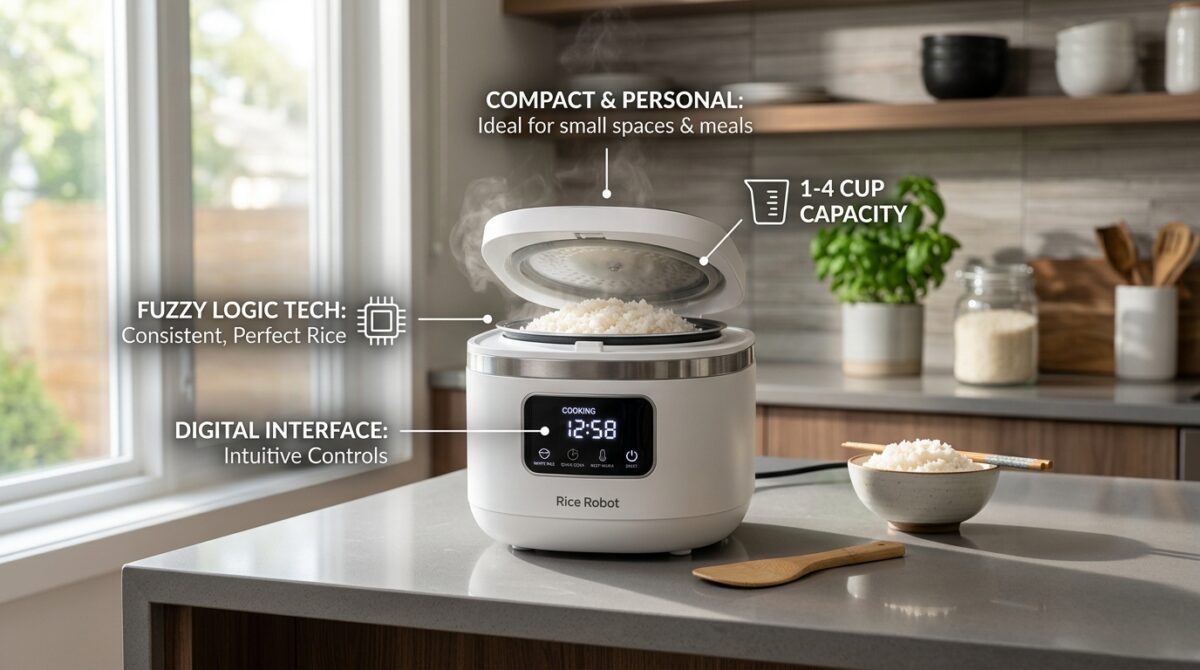
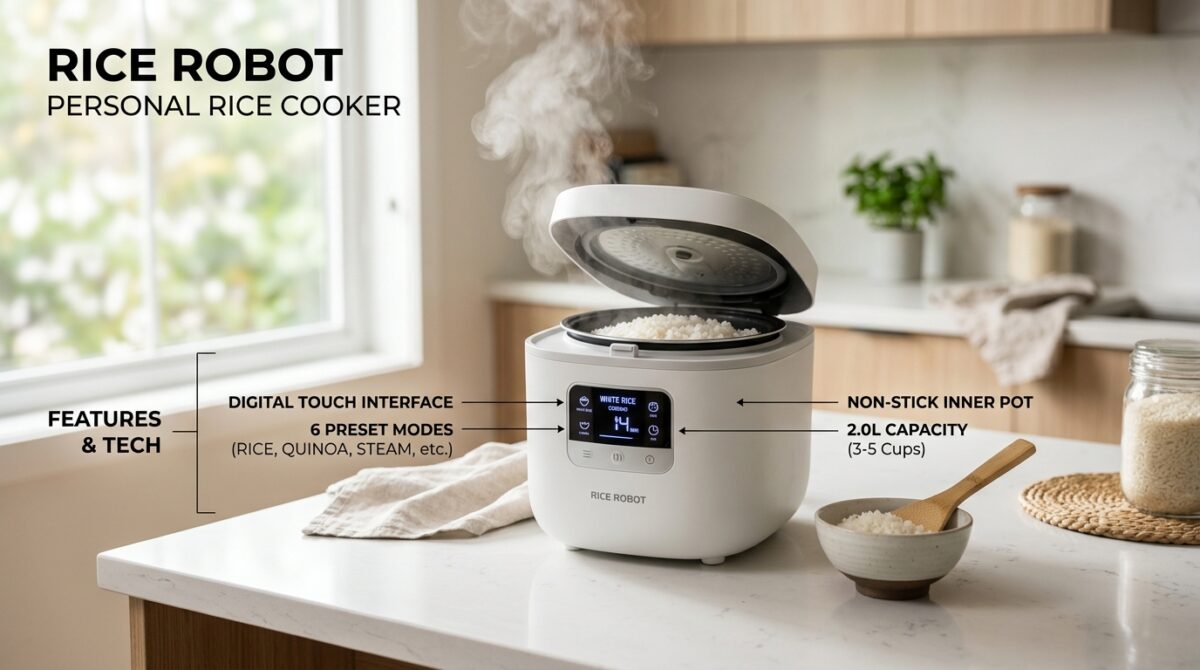
Not everyone cooking rice at home is feeding a family of four. Plenty of people just want a single, well-cooked serving without dragging out a full-size appliance built for much bigger batches. That’s the gap the Rice Robot Personal Rice Cooker is aimed at — a small, 1-quart unit designed around individual portions, with a PFAS-free nonstick interior and a small bundle of extras meant to help someone get comfortable cooking rice at home for the first time.

This article goes through what’s actually included in the Rice Robot set, how people tend to put it to use, who tends to get the most out of it, and a few things worth thinking about before deciding it’s the right fit. The idea here isn’t to rank it against every other personal rice cooker on the market — it’s to give you a clear enough picture of what it does that you can match it against your own habits, portion sizes, and available counter space.

Key Features

1-quart capacity. This is a distinctly small size compared to most household rice cookers, and that’s intentional — it’s built around single servings rather than trying to double as a family-sized appliance.

PFAS-free construction. The cooking surface avoids PFAS (per- and polyfluoroalkyl substances), a chemical group that’s come under closer scrutiny in recent years when it comes to cookware. For anyone who’s made a point of steering clear of PFAS in their kitchen tools, this is a specific detail worth knowing about.

Nonstick interior. Separate from being PFAS-free, the cooking surface also has a nonstick coating, aimed at making rice easier to release from the pot and cleanup less of a chore — a meaningful consideration given how easily cooked rice tends to stick.

Stainless steel steamer tray. The set comes with a steamer tray, opening the door to steaming vegetables, dumplings, or other small items either at the same time rice is cooking or on their own.

Measuring cups included. Rather than hunting down separate measuring tools, the kit comes with its own cups, sized to line up with the appliance’s expected rice-to-water proportions for more predictable results.

60-recipe recipe book. A dedicated recipe book comes bundled in, offering 60 ideas meant to help newer users get past plain rice and explore other dishes suited to a small-batch cooker.

Serving spoon included. A spoon designed to pair with the nonstick surface is part of the package, meant to avoid the scratching that a metal utensil might cause.

“As Seen On TV” product. This labeling generally signals the item was promoted through direct-response TV or online advertising, a fairly common route for smaller kitchen gadgets aimed at everyday consumers rather than a specialty cooking audience.

How It Can Be Used

Given the 1-quart size, the obvious main use is cooking a single portion of rice — enough for one person’s meal — without having to fire up a bigger appliance built for a whole household’s worth of rice. That tends to matter most for people living alone, or anyone who’d rather not end up with a fridge full of leftover rice from a larger batch.

The steamer tray adds a bit of flexibility to that basic function, letting someone steam a portion of vegetables or a small piece of protein directly above the cooking rice, effectively building a simple one-person meal without needing a second pot going at the same time.

The included measuring cups help keep the rice-to-water ratio consistent — something that matters more than people often expect, since even a small miscalculation can throw off texture more noticeably in a smaller batch than it would in a bigger one.

The recipe book tends to get used by people who are newer to cooking rice regularly, or who want ideas beyond the basics. Sixty recipes is enough to explore different grains or simple single-serving dishes scaled appropriately to the appliance’s size.

Because it’s so compact, the Rice Robot shows up often in dorm rooms, small apartments, and office kitchens — places where a full-size rice cooker just wouldn’t make sense, but where the convenience of hands-off rice cooking is still appealing.

Who It May Be Suitable For

People cooking mostly for themselves. The 1-quart size is built with individual portions in mind, which makes it a natural choice for anyone living alone or simply not wanting to deal with the leftovers a bigger batch would produce.

Anyone actively avoiding PFAS in their cookware. If you’ve been paying closer attention to PFAS-free options when buying kitchen tools, this is one of the features that sets this apart from some other nonstick appliances.

College students and dorm dwellers. Limited kitchen space and a small footprint make this a reasonable fit for dorm life, and the included recipe book gives newer cooks a starting point.

People just starting to cook rice at home. With measuring cups and a recipe book bundled in, this set seems geared toward making the process approachable for someone without much prior experience.

Anyone wanting a smaller secondary cooker. Even households that already own a full-size rice cooker sometimes pick up something like this for quick, individual portions without running the larger machine for just one serving.

If you’re cooking for more than one or two people on a regular basis, this capacity is going to feel limiting fast — a standard or larger rice cooker would make more sense for that kind of everyday use.

Important Things to Consider

The capacity really is limited to individual servings. It’s worth being honest with yourself about whether a 1-quart cooker realistically fits how much rice you go through, since this isn’t designed to stretch beyond one or two small portions.

The steamer tray is sized to match the unit. As with most compact rice cookers, don’t expect the steaming tray to hold much more than a modest portion of vegetables or a small piece of protein.

Nonstick surfaces need a bit of care. Sticking with the included spoon instead of metal utensils, and following the manufacturer’s cleaning instructions, will generally help the coating last and keep performing well.

“As Seen On TV” sets expectations somewhat. Products marketed this way tend to prioritize simplicity and ease of use for a broad audience rather than advanced or programmable features, so it’s reasonable to expect something straightforward rather than a feature-heavy appliance.

The recipe book is a starting point, not a guarantee. With 60 recipes included, not every one is necessarily going to match your specific tastes or dietary needs — think of it more as inspiration than a fully personalized meal plan.

You’ll need somewhere to keep the extras. Between the steamer tray, measuring cups, spoon, and recipe book, there’s a bit more to store than just the cooker itself.

Comparison of General Categories

Personal, single-serving rice cookers — the category this model falls into — are built around convenience for one person, sacrificing batch size in exchange for a smaller footprint and simpler day-to-day use.

Standard-capacity rice cookers (roughly 4 to 8 cups cooked) suit small to medium households better, since they can handle multiple servings or leftovers in one go, though they take up noticeably more space than a personal-sized unit.

Larger or commercial-grade rice cookers are built for bigger households, gatherings, or food service use, offering much greater batch sizes but requiring a lot more counter or storage room.

Cooking rice on the stovetop remains a no-appliance option for any portion size, but it demands more attention, and getting a small batch right without over- or under-cooking can actually be trickier than it sounds.

Microwave rice methods offer another appliance-free route for small portions, though results tend to be less consistent than what a dedicated rice cooker delivers.

Which category makes sense really comes down to how much rice you typically cook, how much kitchen space you have to spare, and whether a simple process built specifically for individual portions outweighs the benefits of a larger-capacity machine.

Frequently Asked Questions

How much rice can the Rice Robot handle in one go? With its 1-quart capacity, it’s built for individual servings rather than larger batches meant for multiple people.

Is the cooking surface free of PFAS chemicals? Yes — it’s described as PFAS-free, and it also has a nonstick coating meant to make food release and cleanup easier.

Can it steam food in addition to cooking rice? Yes, a stainless steel steamer tray is included, which can be used alongside the rice as it cooks or run separately for other foods.

What’s included in the set besides the cooker itself? The set comes with measuring cups, a stainless steel steamer tray, a 60-recipe recipe book, and a serving spoon.

Would this work for cooking rice for a whole family? Not really — the 1-quart capacity is meant for individual servings, so a larger-capacity rice cooker would be a better match for feeding multiple people.

Do I need any special utensils to use it? The included spoon is designed to pair well with the nonstick coating, and it’s generally best to avoid metal utensils to help preserve that surface over time.

What does “As Seen On TV” mean in this context? It generally just means the product was marketed through TV or direct-response advertising, which is a common path for compact, convenience-focused kitchen gadgets aimed at everyday buyers.

Conclusion

The Rice Robot Personal Rice Cooker sticks to a clear, narrow purpose: simple, single-serving rice cooking in a compact, PFAS-free, nonstick package, rounded out with a steamer tray, measuring cups, a recipe book, and a spoon. It’s not trying to be a stand-in for a full-size household rice cooker — it’s meant for individuals, dorm setups, or anyone who specifically wants a personal-portion appliance without extra bulk taking up space.

Whether it’s worth adding to your kitchen really comes down to how much rice you typically cook, your living situation, and how much you value a compact, PFAS-conscious design. For someone cooking mainly for themselves, or looking for an approachable way to start making rice and grains at home, the Rice Robot offers a fairly complete, beginner-friendly package built specifically around individual use.

Cosori 10-Cup Rice Cooker: A Practical Overview

Introduction

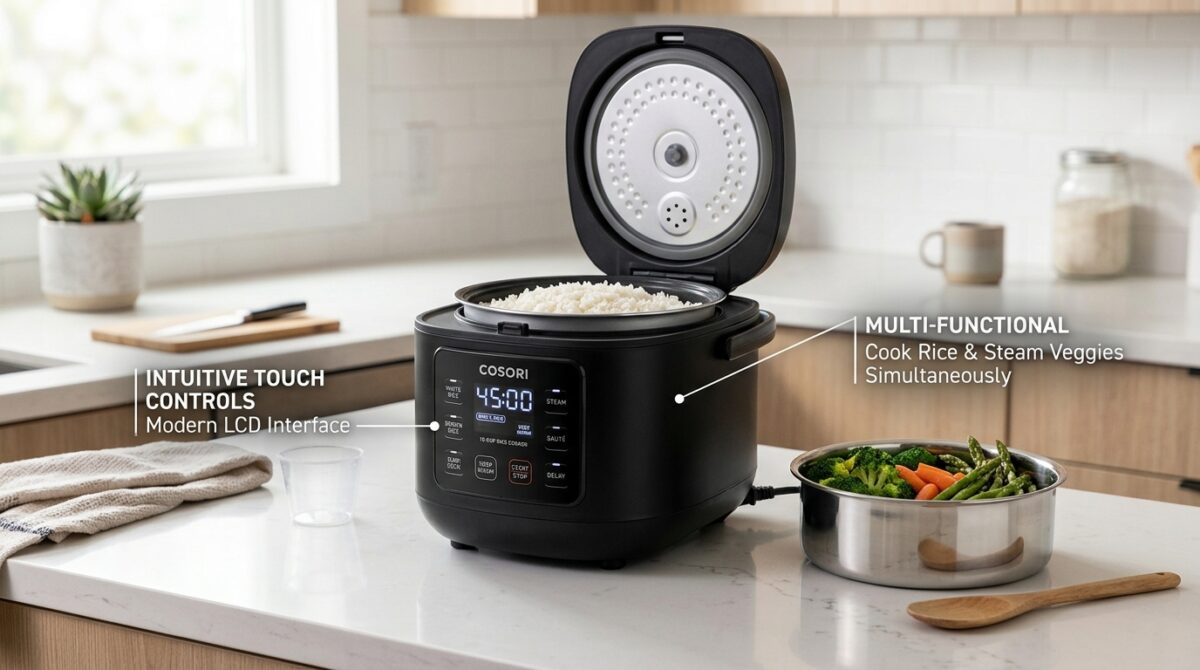
Rice cookers have quietly become one of the more versatile appliances in a lot of kitchens, moving well past their original single job of just cooking rice. The Cosori 10-Cup Rice Cooker leans into that shift, combining a larger cooking capacity with fuzzy logic technology, 18 different functions, and a ceramic non-stick interior, positioning itself less as a basic rice pot and more as a small multicooker built around a rice-cooking core. This article goes through what the unit actually offers, how its various functions tend to get used, who it fits best, and a handful of practical things worth thinking through before it earns a spot on your counter.

As with the other breakdowns in this series, the point here isn’t to crown this the definitive best rice cooker on the market — it’s to lay out what it does clearly enough that you can decide if it matches how you actually cook.

Key Features

10-cup capacity. This is a larger-than-average size for a rice cooker, generally suited to bigger households, regular meal prepping, or families who go through rice or grains frequently and don’t want to run multiple batches.

Fuzzy logic technology. This refers to a more advanced control system than a basic timer-and-heat rice cooker, where the appliance adjusts cooking time and temperature in response to conditions like rice type and moisture content, aimed at producing more consistent results across different kinds of rice and grains.

18 functions. Beyond standard white or brown rice settings, the unit includes a wide range of programmed functions, extending its role into sautéing, slow cooking, and other grain or dish-specific settings, which is a notably broad range for this category of appliance.

24-hour keep warm. The keep-warm function is rated for a full 24 hours, considerably longer than the shorter keep-warm windows found on more basic rice cookers, which is relevant for households with staggered mealtimes or unpredictable schedules.

Non-stick ceramic inner pot. The cooking pot uses a ceramic non-stick coating, which is generally chosen both for easier food release and cleanup, and because ceramic coatings are often marketed as a chemical-conscious alternative to some traditional non-stick coatings.

Stainless steel steamer basket. Included with the unit is a steamer basket, allowing vegetables, proteins, or other foods to be steamed alongside rice cooking or used independently of the rice function.

Sauté function. A built-in sauté setting allows for browning aromatics, vegetables, or meat directly in the same pot before switching to a cooking or slow-cook function, reducing the need for a separate pan for that step.

Slow cooker function. Beyond rice and grains, the unit can also function as a slow cooker, extending its versatility into longer, low-and-slow cooking methods typically associated with dedicated slow cooker appliances.

How It Can Be Used

The core function remains cooking rice and grains, but the fuzzy logic system is generally what sets this apart from more basic rice cookers — rather than applying one fixed cooking program regardless of rice type, it’s designed to adjust based on the specific conditions of what’s being cooked, aiming for more consistent texture whether it’s white rice, brown rice, or other grains.

The sauté function is commonly used at the start of a recipe, allowing onions, garlic, or other aromatics to be browned directly in the pot before adding liquid and switching to a cooking or simmering function, which streamlines certain one-pot recipes that would otherwise require a separate stovetop pan.

The steamer basket is generally used either during rice cooking, to steam vegetables or proteins above the rice at the same time, or independently, for tasks like steaming dumplings or fish fillets without needing to run the rice-cooking function at all.

The slow cooker function extends the appliance’s use into dishes like stews, chili, or slow-braised meats, which is a meaningfully different use case from quick rice cooking and positions the unit as more of an all-around cooking appliance for households wanting to consolidate tools.

The 24-hour keep-warm setting is generally used by households with less predictable mealtimes, where rice made earlier in the day needs to stay at a safe, ready-to-eat temperature well past the initial cooking cycle without needing to be reheated separately later.

With 18 total functions, many users spend some initial time exploring the different presets to figure out which ones get used regularly versus which remain more occasional, since a function list this extensive naturally includes some settings that see more frequent use than others depending on individual cooking habits.

Who It May Be Suitable For

Larger households or those who cook rice frequently. The 10-cup capacity is generally well suited to bigger families or anyone who regularly needs a larger batch of rice or grains without running multiple cooking cycles.

People who want to consolidate multiple small appliances. Between the sauté, slow cooker, and steaming functions, this unit may appeal to those hoping to reduce the number of separate appliances — a slow cooker, a steamer, a sauté pan — cluttering their kitchen.

Meal preppers. The combination of larger capacity and extended keep-warm time may suit those who cook larger batches in advance and eat from them over the course of a day or more.

Households wanting more consistent rice results. The fuzzy logic system is particularly relevant for anyone who has struggled with inconsistent texture using a more basic rice cooker, especially when cooking different types of rice or grains interchangeably.

Those interested in a ceramic non-stick interior. Buyers specifically looking for a ceramic-coated pot, as opposed to a traditional non-stick coating, may find this a relevant distinguishing feature.

Smaller households or individuals cooking primarily single servings may find a 10-cup capacity larger than necessary, and a more compact personal or smaller-capacity rice cooker could be a more practical and space-efficient choice in that case.

Important Things to Consider

Physical size relative to capacity. A 10-cup rice cooker is a larger appliance overall, so measuring available counter and storage space is worth doing before committing to this size, particularly for smaller kitchens.

Learning curve with 18 functions. With this many programmed settings, there’s a reasonable amount of initial exploration needed to understand which functions are most relevant to your typical cooking, and some functions may end up rarely used depending on personal habits.

Ceramic coating maintenance. While ceramic non-stick coatings are generally durable, using non-metal utensils and following manufacturer cleaning guidance is generally recommended to preserve both the coating’s non-stick performance and its appearance over time.

Extended keep-warm and food quality. While a 24-hour keep-warm function is convenient, most rice cooker manufacturers still note that food quality and texture can gradually shift the longer something sits on keep-warm, even though it remains safe to eat within the rated time frame.

Not identical to a dedicated slow cooker or standalone steamer. While the added slow cook and steaming functions are genuinely useful, a rice cooker offering these as secondary functions generally won’t match the capacity or specialized design of a dedicated, standalone slow cooker or steamer built solely around that single task.

Water and rice ratio adjustments. Even with fuzzy logic technology handling some adjustments automatically, achieving consistent results still generally benefits from following recommended rice-to-water ratios for the specific type of rice or grain being cooked.

Comparison of General Categories

Fuzzy logic, multi-function rice cookers, the category this model belongs to, generally aim to combine more advanced, adaptive cooking technology with a broader range of built-in functions, appealing to those wanting more consistency and versatility from a single appliance.

Basic, single-function rice cookers are simpler and typically less expensive, focused purely on cooking rice with a straightforward on/keep-warm cycle, suited to those who don’t need grain variety, sautéing, or slow-cooking capability.

Pressure cooker multicookers offer a different, faster cooking method through pressure rather than standard steaming or boiling, generally including a similarly broad range of functions but built around a different core cooking mechanism than a fuzzy logic rice cooker.

Dedicated slow cookers are built solely around low, extended cooking times, generally offering larger capacity for that specific purpose compared to the slow-cook function on a multi-purpose rice cooker.

Dedicated steamers are similarly built solely for steaming, typically offering more surface area and steaming capacity than the smaller basket included with a rice cooker like this one.

The right category generally comes down to how much variety is wanted from a single appliance, typical batch sizes, and whether functions like sautéing or slow cooking are genuine priorities alongside core rice and grain cooking.

Frequently Asked Questions

How much rice can this cooker prepare at once? It’s designed for up to 10 cups, making it well suited to larger households or those who regularly cook bigger batches of rice or grains.

What does fuzzy logic technology actually do? It allows the cooker to adjust cooking time and temperature based on the specific rice type and conditions, aiming for more consistent results compared to a fixed, one-size-fits-all cooking cycle.

Can this rice cooker be used for dishes other than rice? Yes, with 18 total functions, including sauté and slow cook settings, it’s built to handle a range of dishes beyond plain rice, such as stews, sautéed vegetables, or other grains.

How long can rice stay on the keep-warm setting? It includes a 24-hour keep-warm function, considerably longer than the shorter keep-warm windows found on more basic rice cookers.

Does it include a way to steam food separately from rice? Yes, a stainless steel steamer basket is included, which can be used alongside rice cooking or independently for steaming vegetables, proteins, or other foods.

Is the inner pot easy to clean? The non-stick ceramic coating is generally designed to ease food release and cleanup, though using non-metal utensils and following care instructions is recommended to maintain the coating over time.

Is this rice cooker suitable for a single person or small household? Given its 10-cup capacity, it’s generally better suited to larger households or frequent batch cooking, and a smaller-capacity or personal rice cooker may be more practical for individual use.

Conclusion

The Cosori 10-Cup Rice Cooker combines a larger cooking capacity with fuzzy logic technology, an extensive 18-function range, and a ceramic non-stick interior, positioning it as a fairly comprehensive multicooker built around a rice-cooking core. Its included sauté and slow cook functions, along with the steamer basket and extended 24-hour keep-warm setting, are aimed at consolidating multiple cooking tasks into a single, larger-capacity appliance.

Whether this specific model fits a given kitchen depends on typical household size, how often larger batches of rice or grains are needed, and how much value is placed on additional functions like sautéing and slow cooking within the same unit. For larger households or those looking to reduce the number of separate cooking appliances in their kitchen, the Cosori 10-Cup Rice Cooker offers a fairly well-rounded set of features built around everyday, higher-volume cooking needs.

Cosori 9-in-1 TurboBlaze Air Fryer (6 Qt): A Practical Overview

Introduction

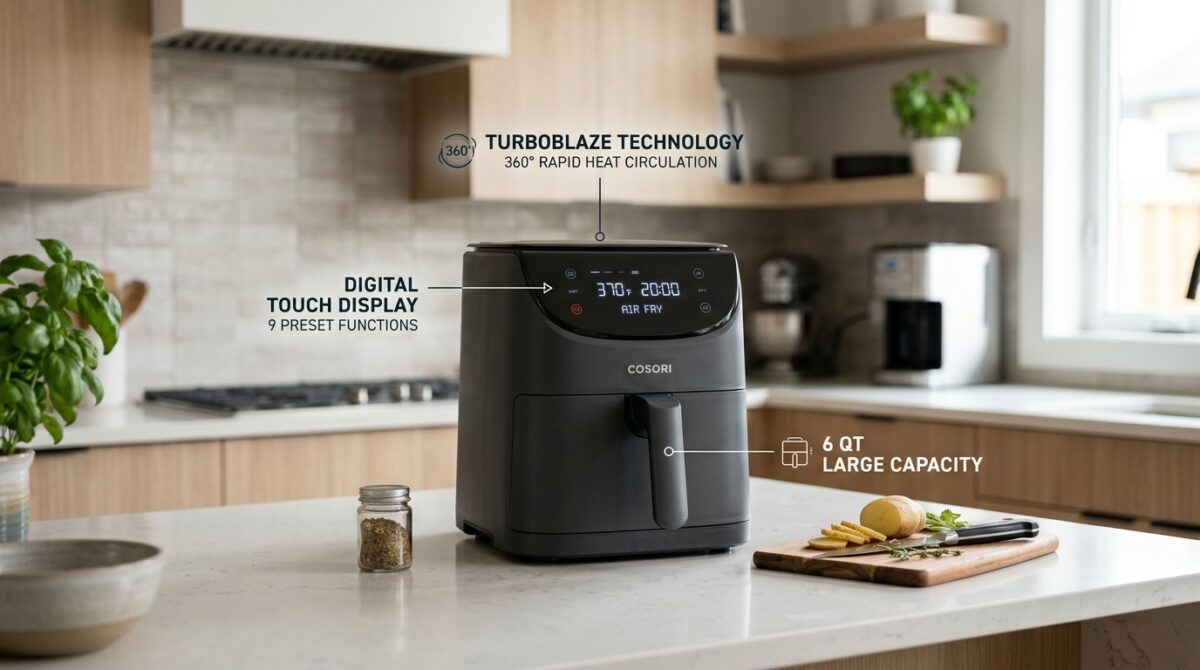
Air fryers have kept evolving well past their original “crisp food with less oil” pitch, and the Cosori 9-in-1 TurboBlaze is a good example of how far that evolution has gone. Rather than being a single-function crisping appliance, it’s built as a broader countertop cooking tool, combining nine different functions, a PFAS-free ceramic interior, and a wide temperature range aimed at more precise, even results. This article breaks down what the TurboBlaze actually offers, how its various functions tend to get used in a real kitchen, who it fits best, and a few practical points worth weighing before it takes up space on your counter.

As with the other appliance overviews in this series, this isn’t a ranking exercise or a claim that this is the single best air fryer available — it’s a straightforward look at the specifications and functionality so you can judge for yourself whether it lines up with how you actually cook.

Key Features

9-in-1 functionality. The unit consolidates nine separate cooking modes — air fry, roast, bake, broil, dry, frozen, proof, reheat, and keep warm — into one appliance, which is a meaningfully broader range than a basic air fryer that only handles crisping.

6-quart capacity. This puts it in the mid-to-large range for air fryers, generally suited to cooking for a small to medium household in a single batch, or accommodating larger cuts of food like a small chicken or a full tray of vegetables.

PFAS-free ceramic coating. The interior basket uses a ceramic, PFAS-free coating rather than traditional nonstick chemical coatings, which is increasingly relevant for buyers specifically trying to avoid PFAS-containing cookware in their kitchens.

Wide temperature range (90°–450°F). The low end of this range, starting at 90°F, extends the unit’s usefulness into functions like proofing dough or dehydrating at low temperatures, while the 450°F high end supports more aggressive crisping and roasting than some air fryers with lower maximum temperatures.

Precise heating for even results. This generally refers to the heating element and airflow design being engineered to distribute heat more evenly throughout the basket, aimed at reducing the common air fryer issue of unevenly cooked food, particularly toward the edges versus the center of the basket.

Multiple named functions rather than generic settings. Having distinct dry, proof, and keep warm functions (rather than folding everything into a single “bake” or “air fry” setting) suggests more specific temperature and time programming behind each mode, tailored to that particular cooking task.

120V standard household power. The unit runs on standard 120V household current, meaning no special electrical setup is needed beyond a normal wall outlet.

How It Can Be Used

The air fry function serves as the baseline crisping mode, used for foods like fries, chicken wings, or frozen snacks, relying on hot air circulation to create a crisped exterior with minimal added oil.

The roast setting is generally used for larger cuts of vegetables or proteins that benefit from steady, even heat over a longer cooking period, similar to how a small oven would handle a roasting task.

Bake and broil extend the unit into oven-adjacent territory, with bake suited to items like small casseroles or baked goods, and broil aimed at applying strong top-down heat for browning or finishing a dish.

The dry function is generally used for dehydrating fruits, vegetables, or homemade snacks like jerky, relying on the lower end of the temperature range and extended cooking time rather than the higher heat used for crisping.

The frozen setting is typically tailored specifically to cooking food directly from frozen, adjusting time and temperature to account for the fact that frozen food behaves differently than fresh or thawed ingredients in an air fryer.

The proof function is a less common inclusion for this category and is generally used for proofing bread or pizza dough, relying on a controlled, gentle warmth to help dough rise, an application usually associated with dedicated proofing boxes or ovens rather than typical air fryers.

Reheat and keep warm round out the set, with reheat generally used to restore some crispness to leftovers like pizza or fried food, and keep warm intended to hold already-cooked food at a safe, ready-to-eat temperature until served.

Who It May Be Suitable For

Households wanting one appliance for multiple cooking tasks. Given the nine included functions, this model may particularly appeal to those hoping to consolidate an air fryer, small oven, dehydrator, and proofing box into a single countertop unit.

People who bake bread or work with yeasted dough. The inclusion of a dedicated proof function is a distinguishing feature for this category, making it relevant to home bakers who might otherwise need a separate method for proofing dough.

Those specifically avoiding PFAS in cookware. As with other PFAS-free products in this space, buyers who have made a deliberate choice to avoid PFAS-containing coatings may find this a meaningful differentiator compared to standard nonstick air fryers.

Small to medium households cooking moderate batch sizes. The 6-quart capacity is generally well suited to cooking for two to four people, or preparing a reasonably sized single dish without needing multiple rounds.

People who value consistency across a batch. The emphasis on “precise heating for even results” suggests this model may be a good fit for anyone who has been frustrated by uneven cooking in a previous, more basic air fryer.

Households needing to cook very large batches at once, or those who only ever use the most basic air-fry function without interest in the other eight modes, may find that the extra functionality here goes underused, and a simpler, more affordable air fryer could cover their needs just as well.

Important Things to Consider

Learning curve across nine functions. With this many distinct modes, there’s a genuine learning period involved in understanding which setting suits which type of food, particularly for functions like proof or dry that aren’t part of a typical air fryer’s core use.

Counter and storage space for a 6-quart unit. A mid-to-large capacity air fryer takes up meaningful counter space, and it’s worth measuring available room, especially in smaller kitchens, before committing to this size.

Ceramic coating care over time. While PFAS-free ceramic coatings are generally durable, they can still be sensitive to metal utensils or abrasive cleaning tools, so following manufacturer care instructions is generally recommended to preserve the coating’s performance and appearance.

Not identical to a full-size oven for baking tasks. While the bake and roast functions extend the unit’s versatility, its smaller interior capacity compared to a full oven means it isn’t a complete substitute for larger baking projects or big batches.

Preheat times and function-switching. Multi-function units like this one may require preheating time when switching between very different temperature ranges, such as moving from a proofing task to a high-heat roast, which is worth factoring into meal timing.

Cleaning routine for a nine-function appliance. With more functions generally comes more regular use, and correspondingly, a more consistent cleaning routine is generally needed to prevent buildup, particularly for functions like dry or roast that can leave residue over multiple uses.

Comparison of General Categories

Multi-function air fryers with baking and dehydrating capability, the category this model belongs to, aim to consolidate several small appliances into one unit, offering broader versatility at the cost of a more complex interface and larger footprint compared to basic air fryers.

Basic single-function air fryers focus purely on the crisping function, generally offering a simpler, more affordable option for those who don’t need baking, proofing, or dehydrating capabilities.

Countertop convection ovens offer a larger interior space for baking sheets or bigger dishes and often include many of the same functions (bake, broil, roast), generally at a bigger overall size than a compact air fryer, even a large one like this.

Dedicated dough proofers or proofing boxes are built solely around dough proofing, generally offering more consistent, purpose-built conditions for that specific task compared to a secondary proof function on a multi-purpose appliance.

Dedicated dehydrators are similarly built solely for dehydrating, generally with more surface area and airflow control tailored specifically to that task compared to a general air fryer’s dry setting.

The right choice generally comes down to how many distinct cooking functions a household actually plans to use regularly, available counter and storage space, and whether consolidating several appliances into one unit is worth the added interface complexity compared to keeping single-purpose tools.

Frequently Asked Questions

How many cooking functions does the TurboBlaze include? It includes nine functions: air fry, roast, bake, broil, dry, frozen, proof, reheat, and keep warm.

Is the interior coating free of PFAS chemicals? Yes, the unit uses a PFAS-free ceramic coating rather than a traditional chemical nonstick coating.

What temperature range does it support? It ranges from 90°F to 450°F, with the lower end supporting functions like proofing and dehydrating, and the higher end supporting crisping and roasting.

Can it be used to proof bread dough? Yes, a dedicated proof function is included, which is a less common feature among air fryers and is generally aimed at helping yeasted dough rise under controlled, gentle warmth.

How much food can the 6-quart basket hold? A 6-quart capacity is generally suited to cooking for a small to medium household in one batch, or accommodating a moderately sized cut of meat or a full tray of vegetables.

Does it require any special electrical setup? No, it runs on standard 120V household power, the same as most typical kitchen appliances.

Is this a good replacement for a full-size oven? For many everyday tasks like baking, roasting, and reheating, it can serve as a practical substitute, though its smaller interior capacity means it isn’t a complete replacement for large-batch or large-dish oven baking.

Conclusion

The Cosori 9-in-1 TurboBlaze Air Fryer combines a wide range of cooking functions — from basic air frying to less common inclusions like dough proofing and dehydrating — into a single 6-quart, PFAS-free ceramic-coated appliance. Its wide temperature range and emphasis on even heat distribution are aimed at addressing common frustrations with less consistent, single-function air fryers.

Whether this specific model fits a given kitchen depends on how many of its nine functions a household actually expects to use, available counter space, and how much value is placed on consolidating multiple cooking tools into one appliance. For those looking for a versatile, higher-capacity air fryer that goes beyond basic crisping, the TurboBlaze offers a fairly comprehensive set of features built around everyday cooking flexibility.

Rice Robot Personal Rice Cooker: A Practical Overview

Introduction

Not every kitchen needs a large appliance taking up counter space, and not every household is cooking rice for a crowd. The Rice Robot Personal Rice Cooker is built specifically around that smaller-scale need — a 1-quart capacity unit designed for individual or single-serving cooking, with a nonstick, PFAS-free interior and a set of included accessories meant to round out the experience for someone just getting started with home rice cooking. This article looks at what the Rice Robot actually offers, how it tends to be used day to day, who it fits best, and a few practical points worth thinking through before deciding if it belongs on your counter.

As with the other appliance breakdowns in this series, the aim here isn’t to declare this the single best personal rice cooker out there, but to walk through what it actually does so you can weigh it against your own cooking habits, portion needs, and kitchen space.

Key Features

1-quart capacity. This is a genuinely compact size, positioning the Rice Robot as a personal-use appliance rather than something meant to feed a full household in one go. It’s built around single servings or very small batches rather than family-sized meals.

PFAS-free construction. The interior cooking surface is made without PFAS (per- and polyfluoroalkyl substances), a class of chemicals that has drawn increasing attention in recent years regarding cookware safety. For buyers specifically looking to avoid PFAS in their kitchen tools, this is a relevant detail.

Nonstick coating. Beyond being PFAS-free, the cooking surface is also nonstick, which is generally intended to make food release and cleanup easier compared to an uncoated interior, particularly relevant for something as prone to sticking as cooked rice.

Stainless steel steamer tray. Included with the unit is a steamer tray, which allows for steaming vegetables, dumplings, or other foods either alongside rice cooking or as a standalone function, extending the appliance’s use a bit beyond rice alone.

Included measuring cups. Rather than needing to source separate measuring tools, the set comes with its own measuring cups, generally sized to match the appliance’s rice-to-water ratios for more consistent results.

Recipe book with 60 recipes. A dedicated recipe book is included, offering 60 recipes intended to help new users get more out of the appliance beyond just plain rice, covering a range of dishes suited to the 1-quart capacity.

Serving spoon included. A dedicated spoon is included as part of the set, generally designed to work well with the nonstick interior without risking scratches from harder utensils.

“As Seen On TV” product. The product carries this designation, which generally indicates it was marketed through television or online direct-response advertising, a common path for smaller kitchen gadgets aimed at a broad consumer audience.

How It Can Be Used

Given its 1-quart capacity, the most natural use case is cooking a single serving of rice — enough for one person’s meal — without needing to deal with a larger appliance built for bigger batches. This tends to appeal to people who live alone, or who want a quick, individual portion without cooking a full pot that might go partially to waste.

The included steamer tray allows for a bit of meal assembly in one device, where vegetables or a small protein portion can steam above the rice as it cooks, letting someone put together a simple, complete meal without needing multiple pots or pans for a single serving.

The measuring cups are generally used to keep rice-to-water ratios consistent, which matters for rice cooking in particular, since even small variations in that ratio can affect texture and doneness more noticeably in a smaller batch than in a larger one.

The recipe book is typically used by newer owners looking for ideas beyond plain steamed rice, since a 60-recipe collection can help stretch the appliance’s use into other grains, single-serving side dishes, or simple one-pot meals sized appropriately for the unit’s smaller capacity.

Because of its compact size, the Rice Robot is also commonly used in dorm rooms, small apartments, or office settings where a full-size rice cooker would be impractical, but where the convenience of hands-off rice cooking is still appealing.

Who It May Be Suitable For

People living alone or cooking primarily single portions. The 1-quart capacity is specifically suited to individual servings, making it a natural fit for solo households or anyone who doesn’t want to deal with the leftovers that come from cooking a larger batch.

Those specifically looking to avoid PFAS in cookware. Buyers who have made a point of avoiding PFAS-containing cookware and kitchen tools may find this a relevant feature that distinguishes it from some other nonstick appliances on the market.

College students or dorm residents. The compact size, simplicity, and included recipe book make this a reasonable fit for dorm settings where kitchen space and available appliances are often limited.

People new to cooking rice at home. With measuring cups and a dedicated recipe book included, this set is generally aimed at making the process approachable for someone without much prior rice-cooking experience.

Those wanting a secondary, single-serving cooker. Even in households that already own a larger rice cooker, some people keep a smaller personal unit for quick, individual portions without needing to run a bigger appliance for just one serving.

Larger households, or those who regularly cook rice for multiple people at once, would generally find this capacity too limiting for everyday family use, and a bigger-capacity rice cooker would be a more practical choice in that case.

Important Things to Consider

Very limited capacity for anything beyond individual servings. The 1-quart size is a meaningful limitation for anyone thinking of using it for more than one or two people’s worth of rice at a time, so it’s worth being realistic about whether this fits your typical portion needs.

Steamer tray size relative to the unit. As with most compact rice cookers, the included steamer tray is sized to match the smaller overall unit, so it’s generally suited to small portions of vegetables or a modest protein piece rather than larger quantities.

Nonstick coating care over time. Even with a PFAS-free, nonstick surface, using the included spoon rather than metal utensils, and following manufacturer cleaning guidance, generally helps extend the coating’s lifespan and maintain its non-stick performance.

“As Seen On TV” branding and expectations. Products marketed this way are often positioned toward convenience and simplicity for a broad, general audience, so it’s reasonable to expect a straightforward appliance focused on ease of use rather than advanced programmable features.

Recipe book relevance to personal taste. While 60 recipes are included, not all of them will necessarily match every individual’s taste preferences or dietary needs, so it’s worth treating the book as a starting point for ideas rather than an exhaustive, personalized meal plan.

Storage of included accessories. With a steamer tray, measuring cups, spoon, and recipe book all included, some drawer or shelf space is generally needed to keep everything together and easily accessible for regular use.

Comparison of General Categories

Personal, single-serving rice cookers, the category this model belongs to, are generally built around convenience and simplicity for individual portions, trading batch size for a smaller footprint and simplified operation.

Standard-capacity rice cookers (4–8 cup cooked range) are better suited to small to medium households wanting to cook enough rice for multiple people or for leftovers, generally at a larger physical size than a personal unit.

Larger-capacity or commercial-style rice cookers are designed for bigger households, gatherings, or food service settings, offering much larger batch sizes but requiring significantly more counter or storage space.

Stovetop rice cooking remains a no-appliance alternative for any portion size, offering full manual control but requiring more attention to prevent under- or overcooking, especially for smaller, single-serving quantities where timing can be less forgiving.

Microwave rice cooking methods (using microwave-safe containers) offer another no-dedicated-appliance option for quick, small portions, though results and consistency can vary more than with a dedicated rice cooker.

Choosing between these categories generally comes down to typical portion size, available kitchen space, and how much value is placed on a simple, hands-off process specifically scaled to individual servings versus a larger-capacity appliance built for multiple people.

Frequently Asked Questions

How much rice can the Rice Robot cook at once? Given its 1-quart capacity, it’s designed for individual, single-serving portions rather than larger family-sized batches.

Is the cooking surface safe from PFAS chemicals? Yes, the unit is described as PFAS-free, in addition to having a nonstick coating intended to ease food release and cleanup.

Does it come with a way to steam food as well as cook rice? Yes, a stainless steel steamer tray is included, allowing vegetables or other foods to be steamed alongside the rice or used separately.

What accessories are included with the set? The set includes measuring cups, a stainless steel steamer tray, a recipe book with 60 recipes, and a serving spoon, in addition to the rice cooker itself.

Is this suitable for cooking rice for a family? Given its 1-quart capacity, it’s generally better suited to individual portions rather than family-sized cooking, and a larger-capacity rice cooker would be more appropriate for multiple servings at once.

Do I need special utensils to use it? The included serving spoon is generally designed to work well with the nonstick interior, and using non-metal utensils is typically recommended to help preserve the coating over time.

What does “As Seen On TV” mean for this product? It indicates the product was marketed through television or direct-response advertising, a common approach for smaller, convenience-focused kitchen gadgets aimed at a general consumer audience.

Conclusion

The Rice Robot Personal Rice Cooker is built around a clear, focused purpose: simple, single-serving rice cooking in a compact, PFAS-free, nonstick unit, rounded out with a steamer tray, measuring cups, a recipe book, and a serving spoon. It isn’t designed to replace a full-size household rice cooker, but rather to serve individuals, small dorm setups, or anyone specifically wanting a personal-portion appliance without unnecessary bulk.

Whether it fits your kitchen depends largely on typical portion size, living situation, and how much priority is placed on a compact, PFAS-free design. For those cooking primarily for one, or looking for a simple, approachable way to start cooking rice and grains at home, the Rice Robot offers a fairly complete, beginner-friendly set of features scaled specifically to individual use.

AROMA Digital Rice Cooker (ARC-914SBD): A Practical Overview

Introduction

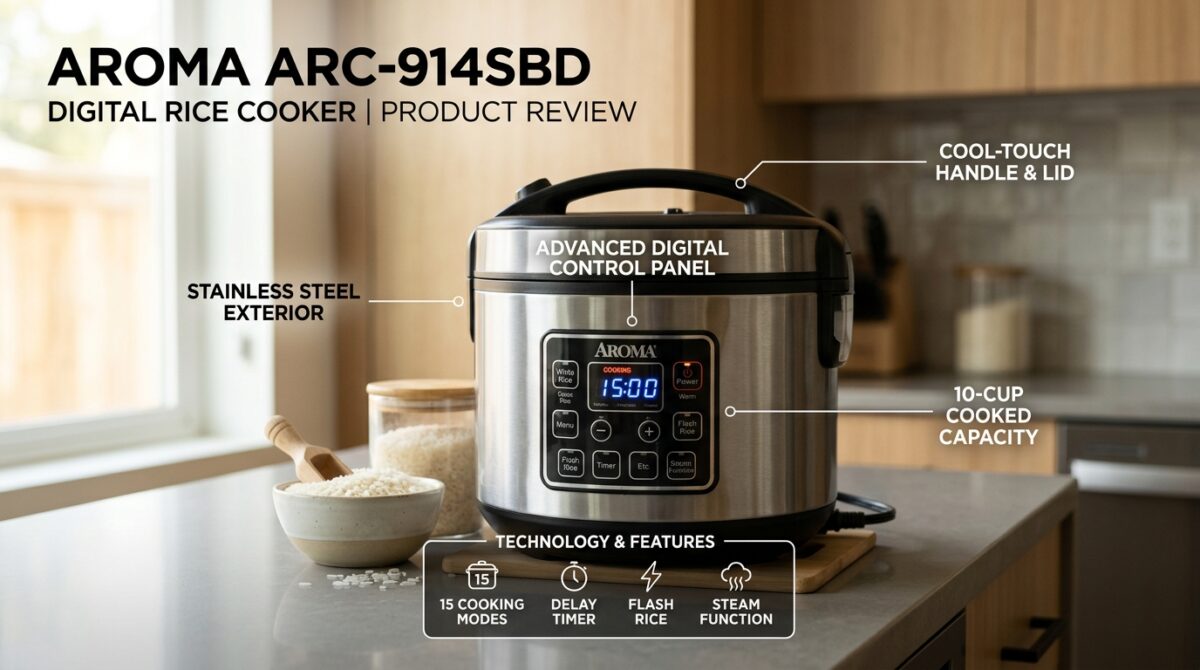
Rice cookers are one of those kitchen appliances that don’t get much attention until you actually own one, and then suddenly you wonder how you ever managed without it. The AROMA Digital Rice Cooker, model ARC-914SBD, is a mid-sized digital unit built for households that want reliable, hands-off rice cooking along with a bit of extra versatility for steaming and other grain-based dishes. It isn’t trying to be a flashy, do-everything gadget — it’s a fairly focused appliance aimed at one core job, done well, with a few useful extras layered on top.

This article walks through what the ARC-914SBD actually offers, how people tend to use it day to day, who it fits best, and a few things worth thinking about before it lands on your counter. None of this is meant as a sales pitch — just a straightforward look at the appliance so you can decide for yourself whether it makes sense for your kitchen.

Key Features

4-cup uncooked / 8-cup cooked capacity. The sizing here is worth paying attention to, since rice cooker capacities are almost always listed in terms of uncooked rice, and the cooked yield roughly doubles once water is absorbed. An 8-cup cooked output generally covers a small to medium household, or enough rice for a family meal with some left over.

Digital controls. Rather than a simple mechanical switch, the ARC-914SBD uses a digital interface, which typically allows for more precise selection between different cooking modes rather than a single one-size-fits-all setting.

Multicooker functionality. Beyond plain white rice, the unit is built to handle a range of grains, and it includes a steaming function as well, positioning it as something closer to a small multicooker than a single-purpose rice pot.

Stainless steel exterior. The outer housing is stainless steel, which tends to hold up well over years of daily use and generally looks a bit more at home on a counter than an all-plastic unit.

2-quart pot size. The internal cooking pot is sized at 2 quarts, which lines up with the stated capacity range and gives a sense of how much physical space the unit will occupy relative to its output.

Steamer tray or insert. Along with cooking rice, the unit is designed to steam vegetables, fish, or other foods, either at the same time as the rice is cooking or as a separate function, depending on how it’s used.

Automatic keep-warm function. Like most rice cookers in this category, it’s built to automatically switch to a keep-warm setting once cooking finishes, so rice doesn’t need to be eaten immediately or reheated separately if a meal is delayed.

How It Can Be Used

The most obvious and frequent use is exactly what it sounds like — cooking white rice, brown rice, or other grains as a base for a meal, without needing to babysit a pot on the stove or guess when it’s done. You add rice and water, select the appropriate setting, and the machine handles the rest, switching to keep-warm automatically once finished.

Because it’s marketed as a multicooker rather than a strict rice-only appliance, it’s also commonly used for grains like quinoa or other rice alternatives, expanding its role a bit beyond the most basic use case. The specific settings available on the digital panel are generally what determine how many different grain types it can handle well.

The steaming function tends to get used alongside rice cooking, where vegetables or proteins are steamed in a tray above the rice as it cooks, letting an entire side dish or partial meal come together in one appliance without extra pots. Some people also use the steaming function on its own, separate from cooking rice, for things like steamed dumplings or fish fillets.

The keep-warm setting is one of those quiet, background features that ends up mattering more than expected in daily use — it means rice made in the morning or early afternoon is still warm and ready to eat come dinner, without needing to microwave it back to temperature or worry about it drying out on the counter.

Who It May Be Suitable For

Small to medium households. Given the 4-cup uncooked / 8-cup cooked range, this unit generally suits a household of two to four people fairly comfortably, with some flexibility for leftovers or slightly larger gatherings.

People who eat rice or grains regularly. For anyone who has rice as a staple side dish several times a week, a dedicated rice cooker tends to save a meaningful amount of time and mental effort compared to managing it on the stovetop.

Those who want a bit of extra functionality without a full multicooker. Because it includes steaming and a range of grain settings, it may appeal to people who want more than a bare-bones rice cooker, but don’t necessarily need the full range of functions found in larger pressure-cooker-style multicookers.

People who value simple, hands-off cooking. The digital, mostly automated nature of the appliance suits those who want to set it and walk away rather than actively monitor cooking progress.

Larger households needing to cook rice in bulk regularly, or those who specifically want pressure-cooking functionality (for things like beans or tougher cuts of meat), may find a bigger-capacity or pressure-cooker-style multicooker better suited to those particular needs.

Important Things to Consider

Capacity limits for larger gatherings. While 8 cups cooked is reasonable for everyday use, anyone regularly cooking for larger groups may find themselves needing to run the cooker more than once, or may want to consider a larger-capacity model instead.

Digital interface learning curve. Digital controls generally offer more precision than a simple mechanical switch, but they also mean a slightly longer initial learning period to understand which setting corresponds to which grain or cooking style.

Steaming tray capacity. Steaming trays included with rice cookers are typically sized modestly, since they sit above the rice pot rather than replacing it, so very large quantities of vegetables or protein may not fit comfortably in a single steaming session.

Non-stick pot maintenance. As with most rice cooker pots, gentle cleaning tools are generally recommended to avoid scratching any non-stick coating, since scratches can affect both cooking performance and the coating’s lifespan over time.

Counter space for a stainless steel unit. While not an oversized appliance, a stainless steel rice cooker with a lid and steaming tray does take up a dedicated spot on the counter, which is worth factoring into kitchen layout, especially in smaller spaces.

Keep-warm duration. While the keep-warm function is convenient, most rice cookers recommend not leaving rice on keep-warm indefinitely, since texture and quality can gradually decline the longer it sits, even while staying warm and technically safe to eat.

Comparison of General Categories

Digital rice cookers with multicooker features, the category this model fits into, generally balance simplicity with a bit of added versatility, offering more than a single-setting rice cooker without the complexity of a full pressure-cooking multicooker.

Basic, single-setting rice cookers are simpler and often less expensive, focused purely on cooking rice with a basic on/off or keep-warm switch, suited to those who don’t need grain variety or steaming functions.

Pressure cooker multicookers (like larger Instant Pot-style appliances) offer a broader range of functions, including pressure cooking for beans, meats, and stews, generally at a larger size and higher price point, aimed at those wanting one appliance to handle a wide variety of cooking tasks beyond just rice and grains.

Stovetop rice cooking remains the traditional, no-appliance alternative, offering full manual control but requiring more attention and timing precision to avoid undercooking, overcooking, or burning rice at the bottom of the pot.

Standalone steamers are built solely around steaming, generally offering more steaming capacity than the tray-based steaming function found on most rice cookers, but without the added rice-cooking capability.

The right category generally depends on how much variety is wanted from one appliance, typical batch sizes needed, and whether steaming or pressure-cooking functions are priorities alongside basic rice preparation.

Frequently Asked Questions

How much rice can the ARC-914SBD cook at once? It’s designed for up to 4 cups of uncooked rice, which generally yields around 8 cups once cooked, suited to small to medium households.

Can it cook grains other than white rice? Yes, as a multicooker-style rice cooker, it’s generally built to handle a range of grains beyond plain white rice, along with a dedicated steaming function.

Does it include a steaming tray? Yes, the unit includes steaming functionality, generally used for vegetables, fish, or other foods either alongside rice cooking or as a separate function.

What happens once the rice finishes cooking? Like most rice cookers in this category, it automatically switches to a keep-warm setting once the cooking cycle finishes, keeping rice warm until it’s ready to be served.

Is the exterior easy to maintain? The stainless steel exterior is generally straightforward to wipe down, though the interior non-stick pot benefits from gentler cleaning tools to avoid scratching the coating over time.

Is this suitable for large families or big batch cooking? For very large households or frequent bulk cooking, a bigger-capacity rice cooker may be more practical, since this model is generally sized for smaller to medium household needs.

Does keeping rice warm for a long time affect its quality? Extended time on keep-warm can gradually affect rice texture, so while it’s convenient for a few hours, most rice cookers, including this type, aren’t intended for indefinite warm-holding without some quality trade-off.

Conclusion

The AROMA Digital Rice Cooker (ARC-914SBD) is built around dependable, everyday rice and grain cooking, with digital controls, a steaming function, and a stainless steel exterior rounding out its feature set. It isn’t trying to be an all-in-one kitchen powerhouse — it’s a focused appliance aimed at making one of the most common cooking tasks easier and more consistent, with a bit of added flexibility for steaming and grain variety.

Whether it fits your kitchen really comes down to how often rice or grains show up on your table, how many people you’re typically cooking for, and how much you value hands-off, automated cooking over stovetop methods. For households looking for a reliable, mid-capacity rice cooker with a bit of extra functionality, the ARC-914SBD offers a solid, no-nonsense set of features built around everyday use.